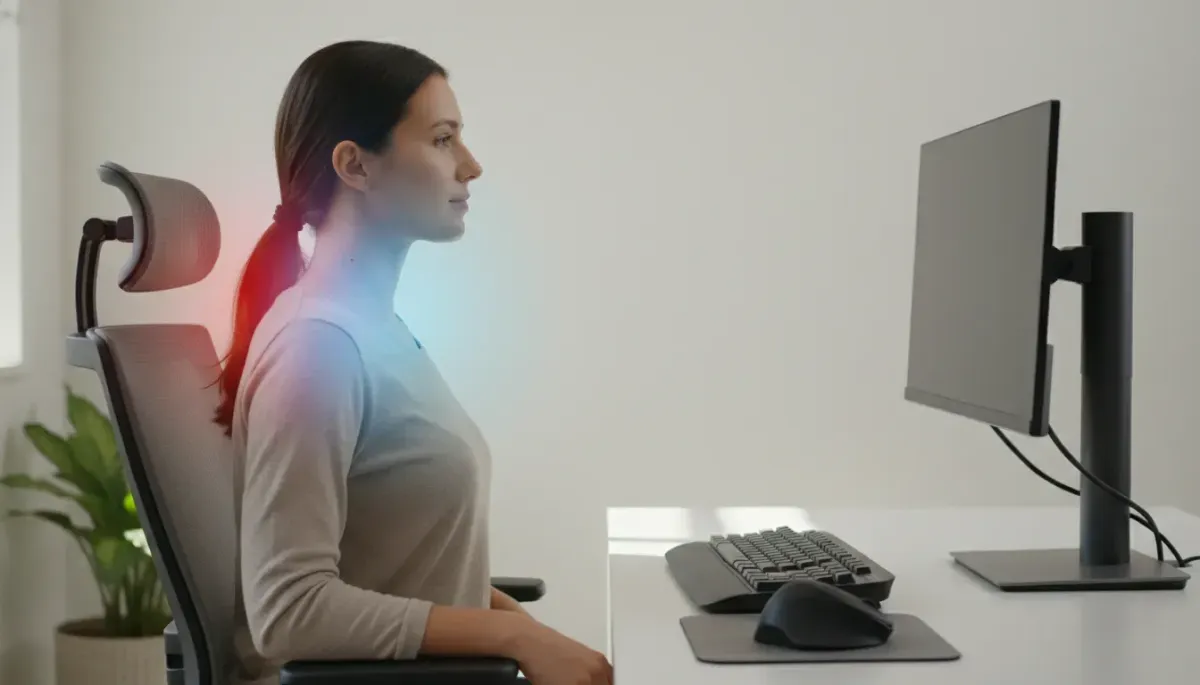
Chiropractic Adjustment Tips for Tech Neck: How to Fix Desk Posture and Ease Neck Pain
A chiropractic adjustment is often part of the conversation when neck stiffness, upper shoulder tension, and posture-related discomfort start building up from long hours at a desk. But for many people, the bigger issue is not just pain relief. It is learning how to change the daily habits that keep causing the problem.
For anyone dealing with tech neck, rounded shoulders, or upper back tightness from computer work, gaming, or laptop use, the most effective plan usually includes three parts: improving workstation setup, stretching tight muscles, and strengthening the muscles that support better posture. A chiropractic adjustment may help some patients as part of a broader care plan, but posture correction still depends on what happens throughout the day.
This guide explains what desk posture problems look like, why they happen, and which simple exercises and setup changes can help reduce strain on the neck and shoulders.
Table of Contents
🏋️ Step 3: Strengthen the muscles that support better posture
🩺 When to ask about a chiropractic adjustment or professional care
🧠 What causes tech neck and poor desk posture?
Tech neck is a common term for the forward head position and rounded shoulder posture that often develops during prolonged screen time. It usually shows up when a person spends hours looking down at a laptop or slumping toward a screen.
That position can place extra stress on the:
Neck muscles
Upper shoulders
Upper back
Chest and front shoulder muscles
Over time, this can contribute to symptoms such as:
Neck pain
Upper shoulder tightness
Muscle tension
Tension headaches
Fatigue when sitting upright for long periods
Some people seek a chiropractic adjustment when these symptoms become persistent. That can be a reasonable question to bring to a healthcare professional, but daily posture habits still matter because they influence how often the irritation returns.
💺 Step 1: Fix the workstation before chasing more treatment
If neck and shoulder pain starts during desk work, the workstation deserves attention first. A chiropractic adjustment may be part of care for some patients, but it will not change the fact that looking downward for hours places repeated strain on the same tissues.
Check these two things first
Where the eyes are looking
What the sitting posture looks like
The biggest issue is often screen height. When the screen sits too low, the head drops forward and the shoulders roll inward. This is especially common with laptop use.
Simple workstation changes that can help
Raise the monitor so the top of the screen is around eye level
Use an external monitor when possible
If using a laptop, consider a laptop stand with an external keyboard
Choose a chair that supports a more upright sitting position
Stand up and move for about 5 minutes every hour
Even brief standing breaks can reduce the amount of time spent loading the neck and shoulders in one position. After standing, sitting back down with better posture becomes easier.
Quick desk posture checklist
Head stacked over the shoulders, not pushed forward
Shoulders relaxed instead of rounded inward
Eyes looking forward rather than down for long periods
Frequent movement breaks built into the day
🤸 Step 2: Stretch the muscles that usually get tight
Desk posture often shortens and tightens certain areas while weakening others. That is why stretching can help relieve discomfort, especially when combined with workstation changes and strengthening work. Patients who ask whether a chiropractic adjustment is enough often benefit from understanding this piece: mobility and posture control are both important.
1. Chin tuck
This movement targets the neck area often stressed by forward head posture.
Start sitting upright or lying on the back
Gently draw the chin straight backward
Avoid tipping the head up or down
Hold for 3 to 5 seconds
Repeat 10 to 15 times
The goal is a smooth backward glide, not a forceful motion.
2. Upper trap stretch
This stretch targets the muscles along the top of the shoulders and side of the neck.
Bring one ear toward the same-side shoulder
Keep the opposite shoulder relaxed
Add light hand pressure only if needed
Hold for 20 seconds
Repeat 3 times per side
3. Doorway chest stretch
Rounded shoulders often go along with tightness across the front of the chest and shoulders.
Place the hands on each side of a doorway
Keep the chest lifted and posture tall
Step forward until a stretch is felt in the chest and front shoulders
Hold for 20 seconds
Repeat 3 times
Hand position can be adjusted slightly higher or lower to change where the stretch is felt.
🏋️ Step 3: Strengthen the muscles that support better posture
Stretching alone usually does not create lasting posture change. Once the workstation is improved and tight muscles are addressed, the next step is strengthening. This is the part that helps the body maintain a better position throughout the day. Even when a chiropractic adjustment is included in care, these exercises can still play an important role in keeping symptoms from returning.
1. Neck extensor strengthening
This exercise works the muscles at the back of the neck.
Lie face down on a bed with the chest supported and the head free
Let the head lower naturally while keeping the face oriented toward the floor
Lift the back of the head upward without cranking the chin upward
Hold for 3 to 5 seconds
Repeat 10 times
If tolerated well, additional sets may be added.
2. Scapular pinches
This exercise helps activate the muscles between the shoulder blades.
Bend the elbows to about 90 degrees
Keep the elbows close to the sides
Rotate the hands backward while squeezing the shoulder blades together
Hold for 3 to 5 seconds
Repeat 20 to 30 times
This is an especially good movement during standing breaks.
3. Rows with a resistance band or cable
Rows help strengthen the upper back muscles that support upright posture.
Stand tall with the head up and shoulders back
Pull the elbows backward
Focus on squeezing the shoulder blades together
Pause for 2 to 3 seconds
Perform 3 sets of 10 repetitions
The key is to avoid turning it into a biceps curl. The elbows should move behind the body to target the postural muscles more effectively.
⚠️ Common mistakes that keep neck pain coming back
People often assume one stretch, one exercise, or one chiropractic adjustment should solve the whole issue. In reality, posture-related neck pain usually improves best when several factors are addressed together.
Common mistakes include:
Keeping the laptop too low
Sitting for hours without breaks
Stretching without strengthening
Forcing neck movements too aggressively
Ignoring rounded shoulder posture
Another common mistake is trying to sit perfectly stiff all day. Good posture is helpful, but regular movement is just as important.
🗓️ A simple daily routine for desk-related neck tension
For many patients, consistency matters more than intensity. A chiropractic adjustment may be one part of care, but a realistic daily plan is what often supports longer-term improvement.
During the workday
Check screen height
Sit with the head and shoulders more aligned
Take a standing break every hour
Do a set of scapular pinches during one or two breaks
Once or twice daily
Chin tucks
Upper trap stretches
Doorway stretch
A few times per week
Neck extensor strengthening
Band rows
This combination helps address both the cause and the symptoms.
🩺 When to ask about a chiropractic adjustment or professional care
A chiropractic adjustment may be something patients consider if neck or upper shoulder pain is persistent, recurring, or not improving with posture correction and exercise. It can also make sense to seek professional evaluation when symptoms interfere with daily activities.
Prompt medical attention is important if neck pain comes with more concerning symptoms, such as severe or worsening pain, significant weakness, or other unusual changes. General educational exercise advice is not a substitute for individualized medical care.
✅ Key takeaway
The most practical approach to desk-related neck pain is usually straightforward:
Improve the workstation
Stretch what feels tight
Strengthen what helps hold better posture
A chiropractic adjustment may be part of a broader treatment conversation for some patients, but long-term relief from tech neck usually depends on changing the daily positions and habits that created the strain in the first place.
❓FAQ
Can a chiropractic adjustment fix tech neck by itself?
A chiropractic adjustment may help some patients, but tech neck usually involves more than one issue. Screen height, prolonged sitting, tight muscles, and weak postural muscles all play a role. Lasting improvement often comes from combining care with workstation changes, stretching, and strengthening.
What is the best sitting position for neck pain at a desk?
A helpful desk posture keeps the head more directly over the shoulders, the eyes looking forward, and the shoulders from rounding inward. The top of the monitor should be near eye level, and regular standing breaks should be built into the day.
How often should posture exercises be done?
Stretching can often be done daily, especially during periods of frequent desk work. Strengthening exercises may be done several times per week. Short movement breaks every hour are also useful for reducing strain.
Are chin tucks good for forward head posture?
Yes. Chin tucks are commonly used to address forward head posture because they help train the neck into a more neutral position. They should be done gently, with the chin moving straight backward rather than tipping up or down.
Why does laptop use make neck pain worse?
Laptops often place the screen too low, which encourages looking down for long periods. That can pull the head forward and round the shoulders, increasing stress on the neck and upper shoulders.
What muscles should be strengthened for better desk posture?
The muscles at the back of the neck, between the shoulder blades, and through the upper back are especially important. Exercises such as neck extensor work, scapular pinches, and rows can help support a more upright position.
Ready for an evaluation?
If you’re dealing with persistent tech neck, upper shoulder tension, or recurring neck pain, consider scheduling a visit with a chiropractic provider to assess your posture mechanics and discuss a personalized care plan. You can start by completing the New Patients form to get the process underway.
What to expect: A consultation and exam, any necessary imaging (such as X-rays), and your first adjustment—along with help figuring out whether your case fits an appropriate scope of chiropractic care.


