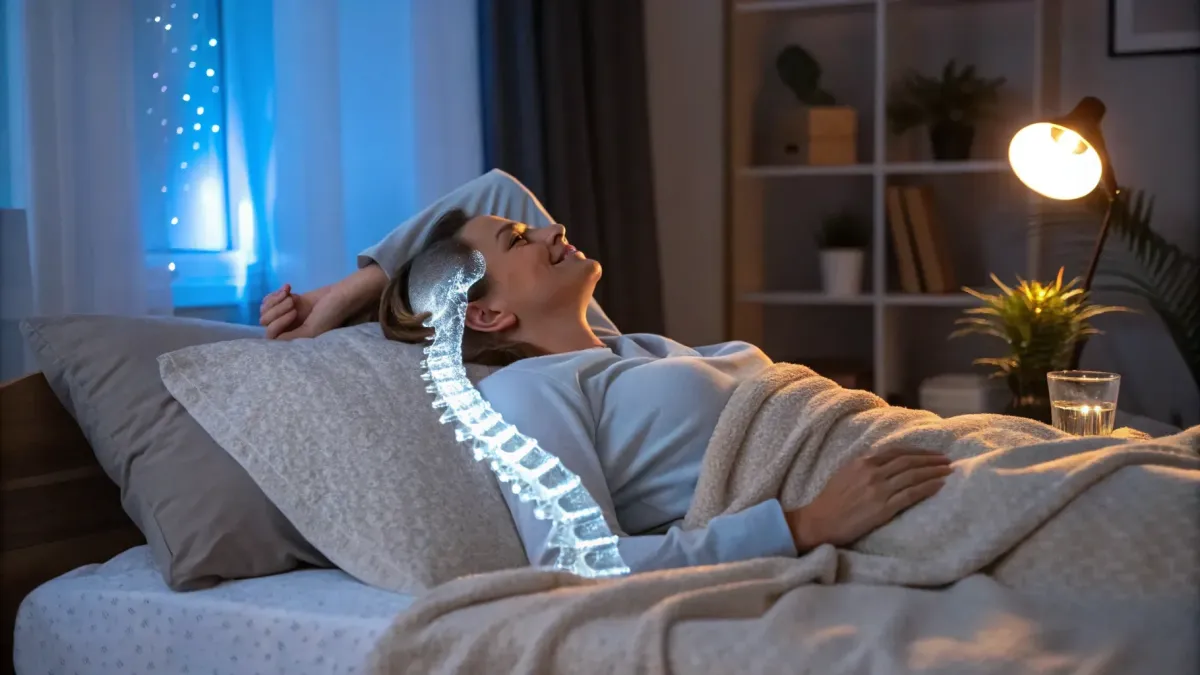
How a chiropractic adjustment and simple lifestyle shifts help lead to deep, refreshing sleep
Sleep troubles are a common complaint among chiropractic patients and the general public alike. This report-style guide explains the most frequent reasons a patient can’t fall or stay asleep and offers clear, practical steps that a person can take tonight to improve rest. The phrase chiropractic adjustment appears throughout because spinal alignment often plays a role in nervous system regulation and recovery, and patients frequently experience better sleep after a chiropractic adjustment combined with basic sleep hygiene.
Table of Contents
📰 Headline: The main causes keeping people awake
🌙 Minerals, digestion, and the nervous system
🔌 Environment, breathing, and sleep timing
💡 Practical actions patients can take tonight
🩺 How chiropractic adjustment fits into the plan
🧠 Adrenal health, waking at night, and hormonal contributors
👩⚕️ Special cases: bladder issues, menopause, and cramps
📌 Summary: a checklist for better sleep
❓FAQ
📰 Headline: The main causes keeping people awake
There are many factors that disturb sleep, but the usual ones are stimulants, overtraining, mineral imbalances, heavy meals late in the day, hyperactive nervous system, environmental disruption, and hidden digestive or hormonal problems. Each of these issues is summarized below to aid the patient in pinpointing their even quickly. Among the many culprits are stimulants, overtraining, mineral imbalances, late heavy meals, nervous-system overactivity, environmental interference, and underlying digestive or hormonal issues. This section provides a brief overview of each problem so that a patient can easily determine which of them applies to them.
Stimulants and dietary triggers
Caffeine and stimulants — Coffee, many teas, and even chocolate contain stimulants that delay sleep onset.
Refined carbohydrates and sugar — High-carb breakfasts or snacks can create carb cravings later in the day, leading to disrupted sleep at night.
Heavy fats late — Large fatty meals near bedtime can strain digestion and the gallbladder, making it harder to fall asleep comfortably.
Exercise and energy
There is an optimum level of physical activity. Overtraining causes a persistently high pulse and a revved nervous system that can make sleep difficult. Conversely, highly trained athletes who suddenly become sedentary can retain excess stored energy in the mitochondria, which also interferes with rest. For most patients, moderate cardio like long evening walks helps calm the nervous system without overstimulating it.
🌙 Minerals, digestion, and the nervous system
Two minerals are repeatedly linked to better sleep: potassium and magnesium. Potassium acts as a physiological tranquilizer, calming pulse and nerves. Magnesium supports muscle relaxation and sleep quality. A diet rich in leafy greens and vegetables supplies both in natural forms. In contrast, high phosphorus intake from excessive meat, fish, and eggs can accelerate the nervous system when not balanced by vegetables.
Low potassium often shows up as elevated nighttime pulse or muscle cramps.
Magnesium deficiency can present as restless legs or poor sleep continuity.
Poor digestion including SIBO or sensitivity to sugar alcohols and MCT oil can cause bloating and wakefulness.
🔌 Environment, breathing, and sleep timing
Simple environmental fixes produce big results. Darkness promotes melatonin production; dim lights or blackout curtains are effective. Electromagnetic fields from devices near the head and watching stressful news before bed can keep the nervous system active. Breathing practices that slow inhalation and exhalation to roughly five seconds each help down-regulate fight-or-flight responses.
The timing of sleep is of great importance. There is a specific time frame—mostly around 10:30 p.m.—when the body's hormonal distribution is more conducive to sleep. Not utilizing that time frame can make it harder to sleep until the next natural time period.
💡 Practical actions patients can take tonight
Limit caffeine, chocolate, and stimulating teas after mid-afternoon.
Favor large leafy salads and vegetables to boost potassium and magnesium; aim for multiple cups of greens if digestion allows.
If training hard, reduce intensity and include low-stress evening walks to expend energy gently.
Turn off screens and avoid the news before bed; use dim lighting in the last hour before sleep.
Move electrical devices away from the head and unplug bedside transformers or chargers.
Practice slow breathing: five-second inhalations followed by five-second exhalations for several minutes while lying down.
Address muscle tension by stretching or gentle self-massage; consider a targeted chiropractic adjustment when pain or persistent tension interferes with sleep patterns.
🩺 How chiropractic adjustment fits into the plan
Chiropractic adjustment often helps patients who have structural tension, nerve irritation, or chronic pain that prevents relaxation. After an adjustment, many people notice reduced muscle spasm, improved nervous system balance, and easier breathing—all factors that support restorative sleep. The chiropractic adjustment is not a cure-all, but it is a practical, nonpharmacologic tool that complements nutrition, exercise, and sleep-hygiene measures.
🧠 Adrenal health, waking at night, and hormonal contributors
Waking at 2 a.m. frequently suggests an adrenal or cortisol timing issue. Cortisol naturally dips during the night; elevated cortisol at this time can awaken someone. Persistent mental stress, unresolved emotional conflict, or overactive adrenals reduce sleep quality. Addressing stressors directly, improving adrenal support through nutrition and sleep, and integrating relaxation techniques help restore normal night rhythms.
👩⚕️ Special cases: bladder issues, menopause, and cramps
Frequent nighttime urination may result from insulin resistance, prostate enlargement, or hormonal changes in menopause. Reducing dairy can sometimes ease prostate-related symptoms. In menopause, declining estrogen and progesterone shifts can provoke bladder sensitivity; topical progesterone cream has helped some patients with urinary urgency. Muscle cramps that awaken a person at night usually indicate electrolyte imbalances—potassium, magnesium, and adequate sea salt often provide fast relief. A small sip of pickle juice can rapidly stop cramps in a pinch due to its electrolytes.
📌 Summary: a checklist for better sleep
Reduce stimulants and refined carbs.
Increase potassium and magnesium through vegetables or targeted supplementation.
Use relaxation breathing and dim the lights before bed.
Move electrical devices away from the bedside.
Manage stress and address adrenal fatigue patterns.
Consider a chiropractic adjustment when structural or nerve-related tension prevents relaxation.
❓FAQ
How soon can a patient expect better sleep after a chiropractic adjustment?
After a day or even within a few days, the patients who feel the muscle tension and nervous system signaling decrease have reported their improvement. The primary reason would be that sustained benefits involve not only chiropractic but also the proper sleep hygiene and a healthy diet.
Can breathing exercises replace the need for a chiropractic adjustment?
Breathing movements are effective in activating the relaxation response of the nervous system and are usually beneficial for sleep but they are physiological interventions rather than structural ones. Spinal manipulation as a chiropractic adjustment can be added to the work of breathing by the opening of joints and the reduction of chronic muscle guarding.
What minerals should a patient prioritize for sleep?
The primary tasks are potassium and magnesium. Potassium is responsible for the relaxation of pulse as well as for the calming of nerves, while magnesium facilitates muscle relaxation. Adding more leafy greens and salads to your diet is a beneficial diet therapy.
Are there simple strategies for nighttime bladder issues?
The main cause is firstly to determine. For causing frequent urination due to insulin resistance, dietary changes and intermittent fasting are the two things that can be useful. If it is a prostate-related concern, then bac...temporally cheese/ease diet may help. The ladies who go through menopause can also experience the lack of progesterone support for the bladder sensors.
When should a patient see a professional?
Seek hands-on care when pain, persistent muscle spasm, or chronic sleep disruption continues despite basic interventions. A chiropractor can assess structural contributors and recommend an integrated plan that includes a chiropractic adjustment when appropriate.
Potassium, a physiological tranquilizer, is known for its effectiveness in relaxing the nervous system and for its supportive action in lowering pulse rates at night.


